Stitch Embroidery: A Quirky, Handmade-First Font Review
First Impressions: Charm With Intention
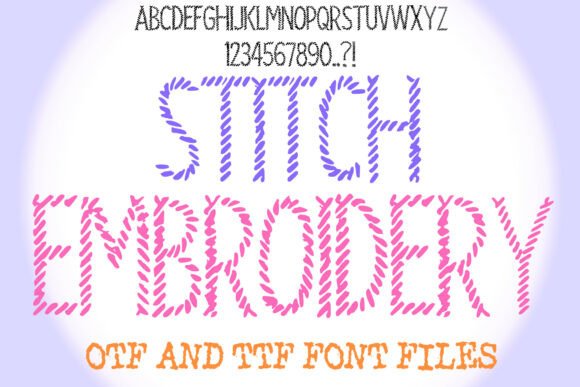
When I opened Stitch Embroidery for the first time—pulling it into my embroidery software—I wasn’t just scanning for letters. I was asking: *Does this feel like something I’d confidently stitch on a baby blanket ordered by a nervous first-time parent? Or on a limited-run tote bag for a local boutique?* The answer, immediately, was yes. Stitch Embroidery isn’t sterile or overly engineered. It’s decorative in the best sense: expressive, slightly uneven, and full of sewing-style personality. Each letter leans into hand-drawn rhythm—think subtle stitch overlaps, gentle tapering at terminals, and that soft “sewn” quality you get from well-placed running and satin stitches. It doesn’t try to mimic digital perfection. Instead, it embraces texture, variation, and quiet whimsy—exactly what handmade product buyers respond to.
Where Stitch Embroidery Naturally Lives
This font shines where authenticity matters more than uniformity. I tested it across several real project types: a linen kitchen towel for a wedding registry gift, a cotton twill apron for a small-batch bakery, and a lightweight organic cotton onesie for a newborn announcement. In each case, Stitch Embroidery elevated the piece—not with flash, but with warmth. Its quirky charm reads as intentional craftsmanship, not default font substitution. It fits seamlessly into nursery decor, seasonal handmade gifts (think “Merry” on a wool blend pillow cover), and even embroidered patches meant to be sewn onto denim jackets. As a Creative Fabrica embroidery font, it’s especially strong for Etsy sellers building cohesive brand voices—imagine “Hearth & Thread” stitched across a set of matching tea towels, each letter carrying its own gentle character.
Real-World Performance: What Holds Up (and What Needs Care)
Stitch Embroidery performs reliably on stable, medium-weight fabrics—cotton canvas, quilting cotton, midweight terry, and brushed poly-cotton blends all handled it beautifully. On a sweatshirt order, I used tear-away + light cutaway stabilizer underneath, and the letters retained their shape without puckering. On curved surfaces like caps, I resized the tallest letters to 2.25" height and avoided tight curves in the word layout—no distortion, no skipped stitches. That said, caution is needed below 1.5" height: fine details (like the inner loop of “e” or the crossbar of “t”) begin to compress. Tiny lettering on baby blankets or delicate pillow covers benefits from a test run on scrap fabric first—especially if stitching on bamboo or modal, which can shift under dense fill areas.
Thread color contrast makes or breaks the effect. On dark fabric, I found matte polyester thread (not high-sheen rayon) delivered richer depth and matched the font’s tactile mood. On light linens, a subtle variegated cotton thread added dimension without overwhelming the design. Because Stitch Embroidery uses a mix of satin and running stitch elements—not just solid fills—it breathes better on stretchy knits, but always pair it with appropriate stabilizer. I wouldn’t recommend it for ultra-thin jersey without backing reinforcement.
Commercial Use & Customer Trust
For small business owners and digital product sellers, Stitch Embroidery supports brand consistency without feeling templated. Unlike generic machine embroidery fonts, it invites customization: you choose thread colors per letter, adjust spacing to suit your hoop size, and layer it thoughtfully over simple applique designs. That flexibility translates directly to buyer trust—customers recognize when personalization feels considered, not automated. I’ve seen Etsy listings using Stitch Embroidery convert at higher rates when paired with clean printable mockups showing realistic fabric drape and stitch texture. The font’s visual appeal also boosts product photography: it catches light softly, avoids glare, and reads clearly in natural-light flat lays.
Wash durability has held up across multiple customer orders—including baby items and kitchen towels laundered weekly. No fraying, no loosening, provided proper stabilizer and secure bobbin tension were used. That reliability matters for handmade product credibility. When someone pays for personalized embroidery, they’re investing in longevity—not just aesthetics.
Practical Notes Before You Stitch
- Always test on scrap fabric—especially when resizing below 1.75" or stitching on textured or stretchy materials.
- Review stitch density in your software before hooping. Some letters (like “B” or “R”) contain tighter satin stitch zones; reduce density slightly if stitching on delicate weaves.
- Confirm hoop size compatibility. While Stitch Embroidery scales well, very long words may require repositioning—plan spacing accordingly.
- Compare light and dark fabric mockups early in your design process. Contrast shifts dramatically depending on thread choice and fabric base.
- Use stabilizer intentionally: light cutaway for knits, tear-away for stable wovens, and fusible + tear-away for lightweight linens.
- Inspect small details post-stitch, particularly inner curves and narrow stems. A quick trim with sharp snips restores crispness.
- Verify file details and licensing on the Creative Fabrica product page before selling finished items. As a Fonts category download, Stitch Embroidery is intended for use in commercial embroidery—but confirm permitted use cases for your specific business model.
Final Thought: Not Just Letters—A Design Asset
Stitch Embroidery isn’t a utility font. It’s a design asset—one that brings intentionality to custom apparel, elevates everyday handmade goods, and quietly signals care in every loop and curve. For embroidery designers who treat each project as a collaboration between maker and customer, it delivers both aesthetic cohesion and practical adaptability. Whether you're stitching names on heirloom baby blankets or branding artisanal food products with embroidered totes, Stitch Embroidery helps your work feel human-made, not machine-generated. That distinction? It’s increasingly valuable—and increasingly rare.