Soccer Red Card Embroidery
First Impression: Bold, Instantly Recognizable — But Does It Stitch Clean?
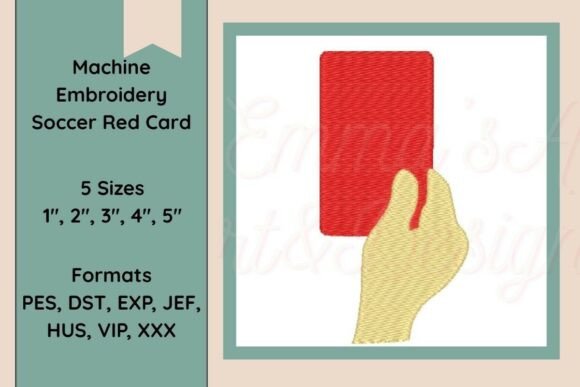
When I opened the Soccer Red Card Embroidery file, my first thought wasn’t “cute” or “trendy”—it was “this will stop someone in their tracks.” The shape is tight and authoritative: a clean rectangle with sharp corners, bold black border, and that unmistakable crimson fill. No player names, no team logos, no extra graphics—just the red card itself, rendered with confident simplicity. That’s a win. In embroidery, clarity trumps clutter every time—and this design respects that rule. It feels like a visual quote from the game: decisive, unambiguous, full of personality without needing explanation.
A Real Project Test: Embroidering It on a Heavy Cotton Tote Bag
Last week, I used Soccer Red Card Embroidery on a 14-oz natural canvas tote for a local youth soccer league’s volunteer appreciation gift. We paired it with white thread on the front pocket—no background fill, no outline stitch, just the card as-is. The result? Crisp, legible, and surprisingly expressive. Even at 3.2 inches wide, the red field held its shape without bleeding or puffing. The black border stayed razor-sharp thanks to well-placed satin stitch edges—not too dense, not too sparse. Customers didn’t ask “What is that?” They grinned and said, “Oh—you *mean* the ‘I called the foul’ card.” That kind of instant recognition is gold for a handmade product.
Where It Shines (and Where It Needs Extra Care)
Soccer Red Card Embroidery works beautifully on:
- Custom apparel—especially sweatshirts and structured tees where the bold shape reads well at arm’s length
- Embroidered patches—its flat, graphic nature makes it ideal for sew-on or iron-on versions
- Tote bag design and apron fronts, where high-contrast impact matters more than fine detail
- Holiday embroidery for coaches or referees—think “Stocking Stuffer Edition” on a tea towel or pillow cover
- Craft business items like baby onesies (with caution—see below) or boutique-branded caps
But be thoughtful about context. On thin fabric like lightweight cotton poplin or baby knit, the red fill can shadow or show through—always test with your exact stabilizer stack. On stretchy fabric, skip the satin border unless you’re using cutaway + topping; the tension needs support. And on curved surfaces like cap fronts, reduce size to 2.5 inches max—anything larger risks distortion in the corners.
Design Integrity Under Real Wear & Wash
I stitched one version on a midweight cotton blend sweatshirt and washed it three times (cold, gentle cycle, air-dried). No fraying, no fading, no puckering—the stitch density felt balanced. Not so dense it hardened the fabric, not so light it looked insubstantial. That balance matters for commercial embroidery clients who expect durability, not just aesthetics. For personalized gifts, that reliability builds trust: when someone orders a “referee-themed birthday shirt,” they’re not just buying a design—they’re buying confidence that it’ll hold up.
Small Details That Make a Big Difference
The corner radius is subtle but smart—just enough softness to avoid needle stress points, yet still reads as “official card.” There’s no tiny text or micro-detail to fail on low-res machines. No applique design layers to align. Just one cohesive machine embroidery design built for clarity over complexity. That makes it unusually versatile for Etsy sellers and small shop products: easy to mock up, quick to digitize into alternate sizes, and simple to describe in listings (“bold red card, no extras, ready to stitch”).
Practical Designer Notes Before You Stitch
Before adding Soccer Red Card Embroidery to your next digital embroidery file bundle or client project, do these five things:
- Test on scrap fabric—especially if using dark thread on light fabric or vice versa. Check how the red field renders with your specific rayon or polyester thread.
- Review stitch density in your editing software. If it’s above 18,000 stitches for a 3-inch version, consider simplifying the fill—dense red areas can heat up and distort on slower machines.
- Confirm hoop size compatibility. This isn’t a tiny motif—it needs breathing room. Don’t force it into a 4x4 hoop unless the file is explicitly scaled for that.
- Inspect corners and borders in zoom view. A jagged satin stitch edge ruins the authority of the card. Smooth transitions = professional finish.
- Check licensing. Since this is marketed for “Sports Fans Makers,” verify whether resale of finished items (like embroidered caps or patches) is permitted before listing on Etsy or at craft fairs.
Why It Works for Your Brand—Not Just Your Hoop
This isn’t just another embroidery project—it’s a conversation starter. When a parent sees it on a coach’s apron at a tournament, or a teen wears it on a backpack, it signals shared understanding: respect for the rules, love of the game, quiet humor. That emotional resonance lifts your handmade product beyond decoration into identity. For creative entrepreneurs, that’s leverage. It fits cleanly into brand stories around fairness, passion, or lighthearted competition—without needing a tagline.
Final Thought: A Design That Earns Its Place
Soccer Red Card Embroidery doesn’t try to be everything. It’s not whimsical. It’s not delicate. It doesn’t whisper—it declares. And in a market flooded with overly busy motifs and vague sports silhouettes, that focused energy is rare. Use it where boldness serves your intent: on gear that’s meant to be seen, worn with pride, and remembered. Just remember—great embroidery isn’t just about what’s stitched. It’s about what’s felt when someone sees it, recognizes it, and smiles. This one delivers.