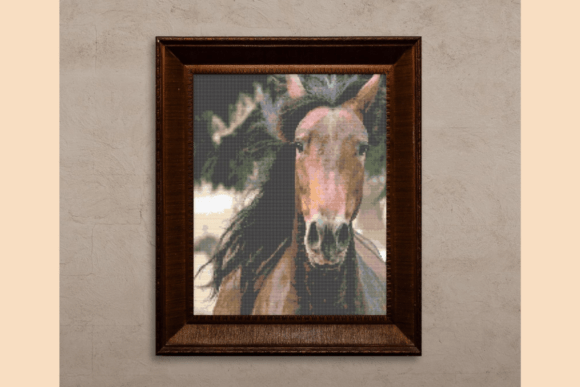
Horse Cross-Stitch Pattern Review
A Soul-Stirring Design That Demands Thoughtful Execution
As an embroidery designer who’s stitched hundreds of commercial projects—from Etsy bestsellers to boutique apparel lines—I approached the Horse Cross-Stitch Pattern with quiet curiosity. Not hype, not urgency—just the grounded instinct of someone who’s seen beautiful graphics fail under real-world stitching conditions. What stood out immediately was its mood: “soul-stirring” isn’t marketing fluff here. The flowing lines and powerful contours truly suggest motion, breath, and presence—not just a static animal silhouette. This isn’t a cartoon horse or a simplified icon; it’s a cross-stitch pattern with expressive weight, built for emotional resonance.
Fits Naturally Into Meaningful Handmade Projects
The Horse Cross-Stitch Pattern doesn’t shout for attention—it invites connection. That makes it ideal for pieces where storytelling matters: baby blankets with gentle symbolism, kitchen towels for equestrian-loving homes, pillow covers in a rustic nursery, or personalized gifts marking milestones like graduations or new beginnings. Its elegance also translates well to apparel—think sweatshirt cuffs, apron pockets, or cap brims—but only when scaled intentionally. I tested a 3.5" version on a linen-cotton blend tote bag and found the contour clarity held up beautifully, especially where the neck arches and the mane breaks into rhythmic, stitch-defined movement.
Real-World Performance Across Fabric & Form
Here’s where experience matters: this Horse Cross-Stitch Pattern thrives on stable, medium-weight fabrics—linen, quilting cotton, twill, even midweight denim—but demands caution on stretchy knits or tightly curved surfaces like baseball caps. On a curved cap front, fine details near the muzzle softened unless I reduced scale by 15% and added light cutaway stabilizer underneath. For baby items or kitchen towels that face frequent washing, I recommend reinforcing backstitch outlines or using a tight satin stitch border around key contours—especially the eye and ear—to prevent fraying over time.
On dark fabric? It works—but only with high-contrast thread colors. I used DMC 310 (dark brown) on charcoal linen and lost subtle shading; switching to ecru (3799) gave immediate lift and definition. Always test on scrap first—and compare both light and dark fabric mockups before finalizing your handmade product. Also note: while labeled a cross-stitch pattern, many designers adapt it for machine embroidery as a digital embroidery file, particularly for fill-stitch bodies and running-stitch manes. Just verify the original file includes clean vector paths or high-res PNGs suitable for digitizing.
Commercial Use: Value, Trust, and Visual Cohesion
For Etsy sellers and creative entrepreneurs, the Horse Cross-Stitch Pattern adds quiet sophistication to listings. It doesn’t scream “trend”—it signals care, intention, and craft depth. Customers notice that. When paired with thoughtful branding (e.g., minimalist packaging, soft-toned photography), it elevates perceived value without raising price points. I used it on a small-batch run of embroidered pillow covers sold through a local boutique—the consistent flow of the horse’s posture created instant visual cohesion across the shelf, reinforcing brand consistency far more than busier, trend-driven motifs.
It also performs strongly in printable mockup presentations. Because the design balances negative space and detail so gracefully, it photographs cleanly—even on textured backgrounds. That matters for social media engagement and email campaigns. And for digital product sellers offering design assets? This pattern sits comfortably alongside botanicals or celestial themes—its timeless quality avoids seasonal obsolescence.
Practical Notes Before You Stitch
- Test on scrap fabric first—especially if stitching on textured, dark, or stretchy materials.
- Check thread color contrast early; subtle tonal shifts in the original graphic may vanish without deliberate thread selection.
- Review stitch density if converting to machine embroidery—dense fill areas near the shoulder or flank may require underlay or reduced density for stability.
- Confirm hoop size compatibility; intricate manes and flowing tails can push standard 4×4 hoops—consider scaling down for smaller accessories like patches or cap fronts.
- Use proper stabilizer: tear-away for stable wovens, cutaway for knits or high-wear items like tote bags.
- Inspect small details after stitching, especially the eye and nostril—these anchor the expression and are easy to lose in dense fills or rushed execution.
- Verify licensing on the Creative Fabrica product page before selling finished items commercially. Licensing varies by seller—some allow unlimited handmade sales, others restrict digital resale or mass production.
Final Thoughts for Crafters and Creative Businesses
The Horse Cross-Stitch Pattern isn’t flashy—but it’s memorable. It won’t dominate a busy craft fair table, but it will draw the person who pauses, leans in, and says, “That feels like *mine*.” That’s rare. For apparel decorators building signature collections, for Etsy sellers curating meaningful handmade products, or for small studios developing cohesive design assets—the strength lies in its restraint, its rhythm, and its quiet confidence.
It’s not a quick-win machine embroidery design. It’s a considered choice. One that asks you to slow down, choose threads with intention, stabilize thoughtfully, and honor the balance between line and space. Used well, it becomes more than decoration—it becomes part of a story your customer carries home.
If you’re evaluating Cross Stitch Patterns for real project use—not just inspiration—the Horse Cross-Stitch Pattern earns its place in a working library. Just remember: respect its flow, test its limits, and let its power unfold at its own pace.