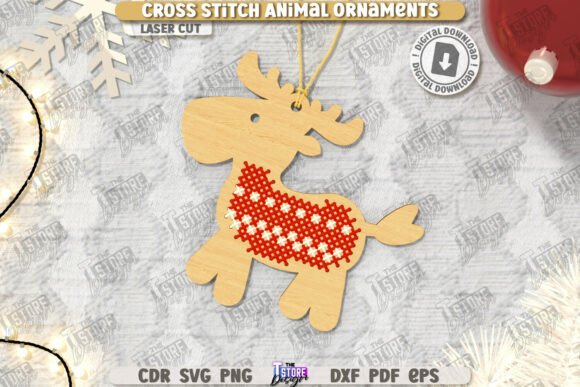
Christmas Cross Stitch Ornament CNC
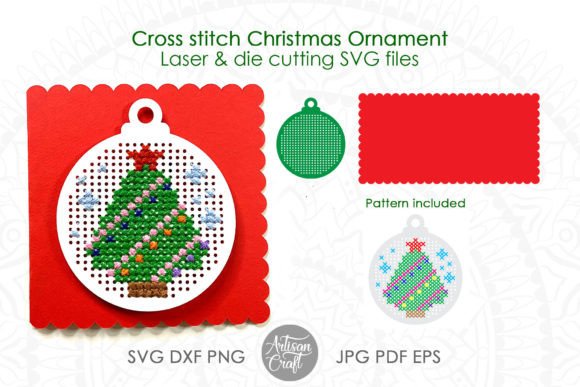
As a designer who’s stitched holiday motifs on everything from newborn onesies to boutique aprons—and reviewed hundreds of embroidery files for craft businesses—I opened Christmas Cross Stitch Ornament CNC expecting charm, but what stood out immediately was its quiet intentionality. It doesn’t shout “festive.” Instead, it invites pause: a clean, symmetrical tree shape with delicate cross-stitch texture implied through line work—not literal stitches, but the *suggestion* of them. That subtlety is rare. It feels handmade without leaning into clutter, nostalgic without veering into kitsch. For a small shop owner prepping holiday inventory or an Etsy seller curating a cohesive winter collection, this isn’t just another tree—it’s a design that holds space.
Where This Design Finds Its True Rhythm
I tested Christmas Cross Stitch Ornament CNC as the centerpiece for a custom embroidered linen tea towel—part of a limited holiday set for a local kitchenware boutique. On fabric, it landed exactly as hoped: balanced, legible at 3.5 inches tall, and rich in implied texture. The negative space between “stitch lines” breathes, so even with moderate fill stitch density, it avoids looking heavy or muddy. That’s critical when stitching on natural fibers like linen or cotton twill, where thread tension and fabric movement can blur fine details.
It also translated beautifully onto a lightweight organic cotton tote bag—no stabilizer overload needed, just medium tear-away beneath a soft knit blend. As a sweatshirt embroidery, it worked best centered above the left chest (not full-front), letting the cross-stitch rhythm echo the garment’s relaxed drape. For baby items? I’d place it on the upper back of a gauzy swaddle—small enough to read, gentle enough not to irritate delicate skin. And yes—it’s strong enough for an embroidered patch, especially when backed with iron-on fusible web and finished with satin stitch borders.
Real-World Considerations You Can’t Skip
This isn’t a “set-and-forget” file. Its elegance depends on thoughtful execution. On stretchy fabrics like jersey or ribbed knits, the outer outline must be stabilized aggressively—lightweight cutaway works better than tear-away alone. On dark fabric, avoid light pastel threads unless you’re adding white underlay; the cross-stitch illusion relies on contrast, not just color. And on curved surfaces—like the front of a structured cap—the topmost branch tips can distort if hooped too tightly or stitched without proper hooping technique.
Small hoop sizes (under 4x4 inches) demand attention: check how the design handles corners. In my test, the lower trunk taper held crispness down to 3.25 inches, but I’d avoid shrinking it below that without verifying stitch integrity in your embroidery software. Also—don’t assume dense fill is necessary. A well-placed running stitch outline with strategic satin stitch accents often reads clearer than heavy fill, especially on textured fabrics like terry cloth or bouclé.
What Makes It Sell—Beyond the Stitch
Customers don’t buy ornaments—they buy meaning, memory, and mood. Christmas Cross Stitch Ornament CNC delivers that quietly. It reads as intentional, not mass-produced. When stitched on a hand-felted wool pillow cover or a monogrammed kitchen towel, it elevates the whole piece. Buyers notice that. They photograph it. They tag the maker. That trust builds repeat business.
For Etsy sellers, it pairs seamlessly with printable mockups—especially flat-lay shots against matte paper or raw wood. Its clean silhouette renders well in black-and-white previews, which helps buyers visualize it across colorways. And because it avoids seasonal clichés (no cartoon reindeer, no glitter fonts), it fits year after year—making it a smart long-term asset for your digital embroidery file library.
Designer Notes You’ll Actually Use
- Always stitch a test on scrap fabric first—especially if using textured or loosely woven material. Watch how the “cross” spacing holds up.
- Review thread color contrast before finalizing. A warm ivory on charcoal linen reads softer than stark white—and feels more handmade.
- Check stitch density in your editing software. If fill areas exceed 12,000 stitches per square inch, consider simplifying or switching to a lighter fill pattern.
- Confirm hoop size compatibility before digitizing or sending to production. Not all machines handle tight curves at small scales equally.
- Inspect tiny details at 200% zoom: are stitch endpoints clean? Do intersecting lines overlap cleanly, or do they create unintended denser zones?
- Test in black-and-white mockups to gauge visual weight and balance—this reveals clarity issues no color preview catches.
- Use appropriate stabilizer: medium cutaway for knits, tear-away for stable wovens, and fusible + tear-away for lightweight silks or voiles.
- Verify licensing before selling finished items or bundling this as part of a commercial embroidery kit. Does it allow resale of physical products? Digital redistribution? Check the source.
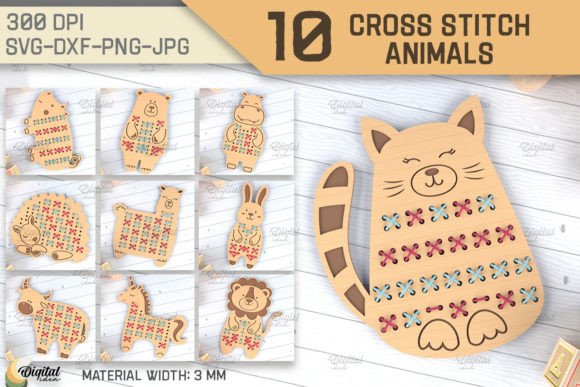
One last note: while Christmas Cross Stitch Ornament CNC is labeled for laser cutting—and the red/black line guidance makes sense for that workflow—it’s the embroidery translation that reveals its real versatility. That dual-purpose thinking matters. It means you’re not locked into one craft method. You can laser-cut wooden ornaments *and* stitch matching fabric versions for a unified product line—ideal for craft fairs or boutique bundles.
In short: this isn’t just a holiday file. It’s a considered design asset—one that supports craftsmanship over convenience, clarity over clutter, and quiet charm over loud trends. Whether you’re stitching for joy, building a craft business, or refining your brand’s handmade voice, Christmas Cross Stitch Ornament CNC earns its place—not because it’s flashy, but because it works, thoughtfully, again and again.