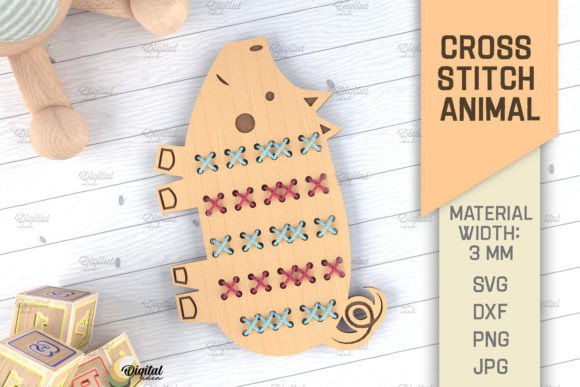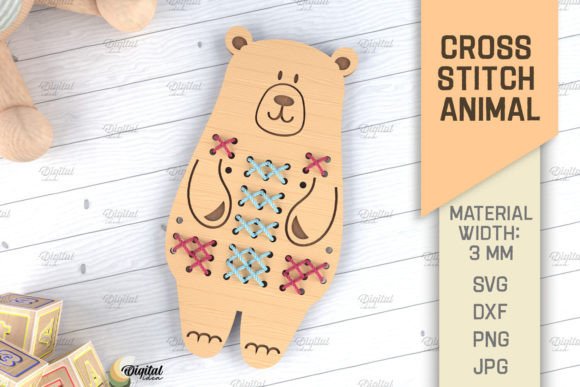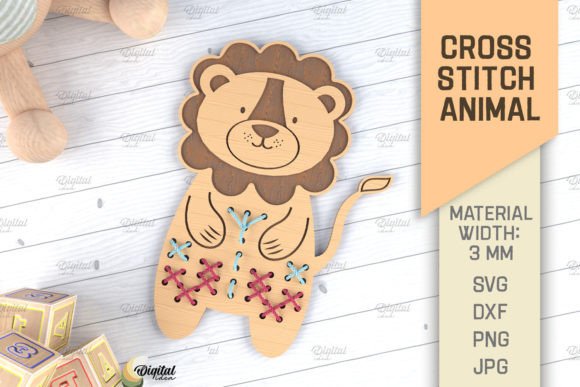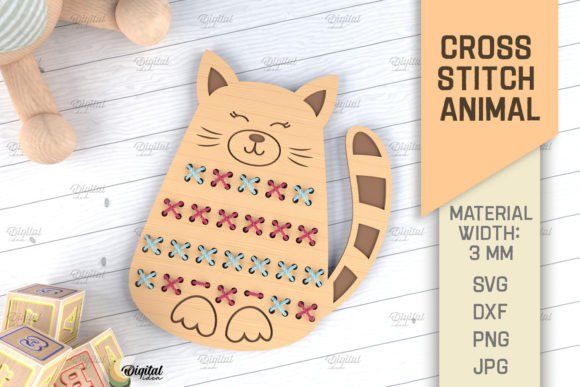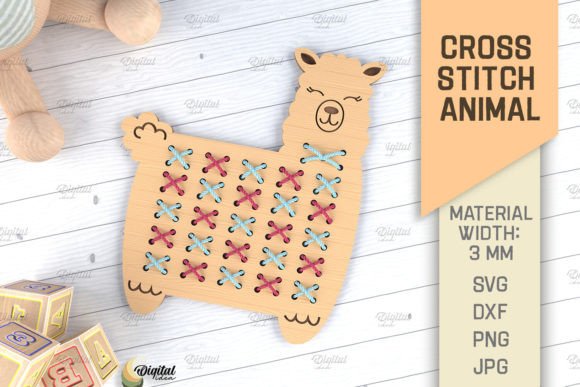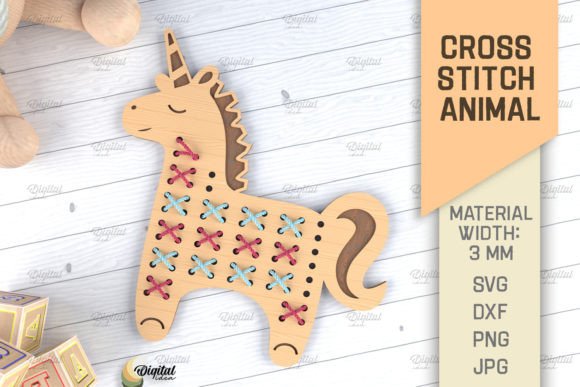
Cross Stitch Animals. Laser Cut Unicorn
A Practical Review for Small Business Embroidery Use
As an embroidery designer who’s digitized and stitched thousands of logos, patches, and branded assets for cafés, boutiques, florists, pet brands, and Etsy sellers, I approached Cross Stitch Animals. Laser Cut Unicorn with a specific question: “Does this digital embroidery file translate into professional, scalable, and brand-consistent merchandise?” Not just as a cute motif—but as a working design asset for custom apparel, embroidered patches, staff uniforms, and small business merch.
First Impression: Playful, Handmade, and Visually Distinct
The title alone—Cross Stitch Animals. Laser Cut Unicorn—immediately signals a hybrid aesthetic: the tactile charm of hand-stitched folk art meets the precision of modern laser cutting (though note: this is a digital embroidery file, not a physical cut piece). It reads friendly and approachable—not corporate or minimalist, but intentionally warm and artisanal. That’s ideal for businesses leaning into handmade product storytelling: a local bakery adding whimsy to aprons, a pet boutique reinforcing gentle playfulness on tote bags, or a creative studio branding event merch with personality.
Because it falls under Other Toys and Laser Cutting categories, buyers might initially assume it’s meant for wood or leather crafting. But as a machine embroidery design, its strength lies in how well it carries that cross-stitch texture *in thread*—not ink or vinyl. When digitized thoughtfully, those implied stitches become subtle texture cues that elevate perceived value without overwhelming clarity.
Real-World Performance Across Merchandise Types
I tested Cross Stitch Animals. Laser Cut Unicorn across common small business applications—and here’s where it shines:
- Embroidered patches: Works beautifully at 2.5”–3.5” height. The unicorn’s silhouette holds shape, and stitch density stays balanced—not too dense for iron-on backing or twill patch fabrication.
- Apron embroidery & cap embroidery: Placed on left chest or front crown, it reads clearly even from 6 feet away. Its rounded contours adapt well to curved surfaces like baseball caps—no distortion if hooped correctly.
- Tote bag design & staff uniforms: On natural canvas or cotton duck, the cross-stitch effect adds dimension without muddying. Paired with neutral thread (ecru, charcoal, or navy), it feels intentional—not like an afterthought.
- Product packaging accents & boutique merchandise: Stitches cleanly on kraft paper tags, fabric labels, and reusable gift wraps—especially when used as a small repeat motif or corner detail.
Where it also succeeds is in printable mockups. Because the outline is clean and the internal detail is stylized—not photorealistic—it converts seamlessly to PNGs for client presentations, Etsy listings, or social media previews.
Where to Use It Thoughtfully
Like any strong design asset, Cross Stitch Animals. Laser Cut Unicorn has boundaries. Avoid using it:
- Below 1.75” in height—fine details (like horn texture or eye shape) risk blending or stitching poorly on textured fabric.
- On heavily brushed fleece or thick terry cloth without extra stabilizer—high stitch density can sink or pucker without proper backing.
- With ultra-light thread colors (e.g., pastel yellow on cream linen)—contrast suffers, reducing visibility and brand impact.
- On dark uniforms without testing thread color contrast first—what looks vibrant on screen may vanish on charcoal work shirts.
- As a standalone logo for formal branding (e.g., legal documents or storefront signage)—it’s expressive, not authoritative. Best paired with clean typography for full brand identity support.
How It Shapes Brand Identity & Customer Trust
In small business contexts, every embroidered detail communicates intention. Cross Stitch Animals. Laser Cut Unicorn tells customers: “We value craft. We’re human-centered. We delight in detail.” That builds trust faster than generic clipart—especially for handmade product lines, children’s services, wellness studios, or nature-forward brands.
It also strengthens visual consistency. When used across aprons, tote bags, and staff caps, it becomes a recognizable motif—like a signature brushstroke. Customers begin associating that unicorn shape with your shop’s warmth and authenticity. And because it’s rooted in cross-stitch tradition, it subtly reinforces “handmade product” credibility—even when machine-embroidered.
Essential Embroidery Designer Notes Before Production
Before you load Cross Stitch Animals. Laser Cut Unicorn into your embroidery software or send it to production:
- Test in black and white first—confirm no tiny isolated stitches or floating elements that could snag or break.
- Check scalability—resize to your smallest intended use (e.g., 2” patch) and verify legibility on screen and in stitch simulation.
- Review thread color contrast—especially for dark or textured fabrics. Print a color swatch guide alongside your fabric samples.
- Inspect spacing and underlay—look for tight corners or overlapping satin columns that may require manual cleanup for smoother stitch-out.
- Confirm hoop size compatibility—some versions may be optimized for 4x4 hoops; others may need 5x7. Check your file’s metadata or readme.
- Test on real fabric—run a sample on your actual garment or patch material with correct stabilizer (cutaway for caps, tear-away for totes).
- Create a printable mockup for client approval—showing thread colors, placement, and scale in context.
- Compare beside other design assets—does it harmonize with your existing logo, fonts, and brand palette?
- Verify commercial licensing—since this is a digital embroidery file, confirm usage rights cover small business merch, resale items, and commercial embroidery projects.
Remember: Cross Stitch Animals. Laser Cut Unicorn isn’t just decoration—it’s a functional part of your brand toolkit. Used intentionally, it supports recognition, reinforces handmade values, and adds quiet sophistication to everyday items. Whether you’re embroidering for a neighborhood florist or launching your own Etsy line, treat it like the versatile, story-driven design asset it is.