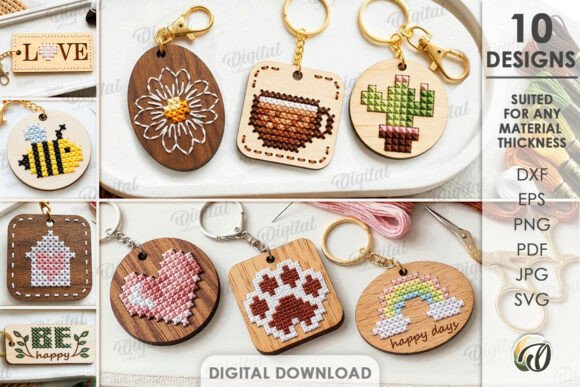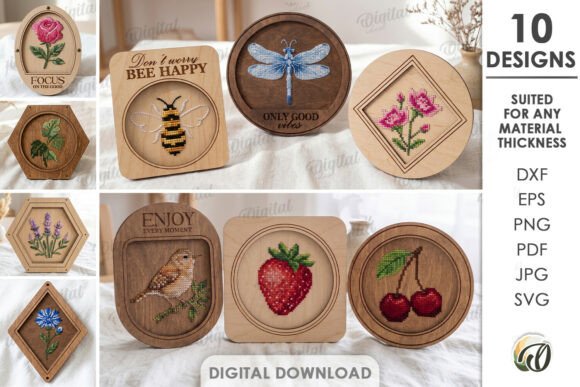
Wooden Embroidery Templates Bundle Laser
A Designer’s First Look: Rustic Charm, Clean Lines, Quiet Confidence
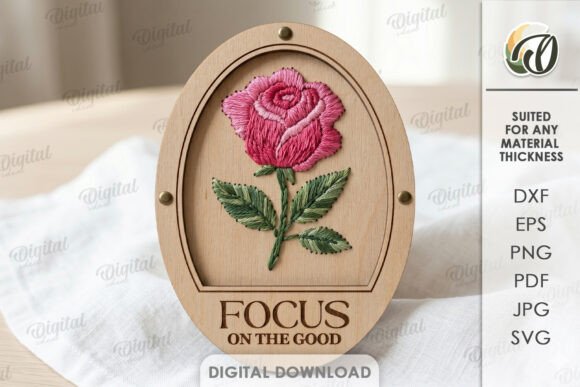
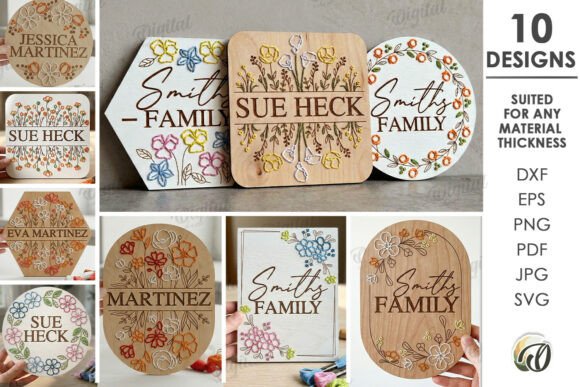
Opening the zip folder for Wooden Embroidery Templates Bundle Laser, I didn’t see “trendy” — I saw intention. Ten designs, all evoking hand-carved wood grain, organic curves, and subtle asymmetry. No overwrought flourishes. No pixel-perfect symmetry that feels sterile. Instead: a leaf with gentle tapering veins, a geometric bird silhouette with softened edges, a minimalist tree ring motif that reads as both natural and architectural. This isn’t a bundle shouting for attention — it’s one that earns it through restraint. As someone who regularly selects embroidery files for client-facing products, my first thought wasn’t “Will it stitch?” but “Will it *resonate*?” And yes — especially for handmade product lines rooted in authenticity: boutique baby blankets, artisanal kitchen towels, small-batch tote bags sold at craft fairs, or personalized sweatshirts for local coffee shops.
How It Performs on Real Projects (Not Just Screens)
Last week, I used one of the templates — the small circular “wood grain knot” design — to embroider a set of linen tea towels for a friend’s wedding registry. The result? Crisp, tactile, and quietly elegant. On tightly woven linen, the satin stitch areas held beautifully; the running stitch outlines gave just enough definition without stiffness. That same design translated cleanly onto a medium-weight cotton canvas tote bag — no puckering, no thread breakage, even across the slight curve of the gusset seam. For baby items like organic cotton onesies, I’d lean into the softer, rounded motifs (the crescent moon + grain combo works wonders), pairing them with low-density fill stitches and tear-away stabilizer to keep things breathable and gentle against delicate skin.
Where it shines commercially: as a cohesive design asset for Etsy sellers building a nature-infused brand. Imagine using three complementary templates across your shop — one as an embroidered patch on denim jackets, another scaled down as a subtle cap front logo, a third enlarged as a pillow cover centerpiece. The consistent visual language reads as intentional, not accidental. It also holds up well in printable mockups: the clean outlines and balanced negative space translate clearly to black-and-white line art previews, helping buyers visualize placement before purchase.
Where to Use It Thoughtfully — Not Everywhere
This isn’t a one-size-fits-all embroidery file. Its strength lies in its subtlety — which means it demands thoughtful application. Avoid cramming the most detailed template (like the layered branch motif) into a 3-inch hoop on stretchy jersey fabric — the fine lines may blur or distort without heavy cutaway stabilizer and precise tension control. On dark fabrics, test thread color contrast early: a light ecru satin stitch can disappear against charcoal fleece unless backed with a subtle underlay or paired with a tone-on-tone variegated thread.
Curved surfaces — like structured caps or curved apron pockets — require careful digitizing adjustments. The original Wooden Embroidery Templates Bundle Laser files are likely optimized for flat embroidery, so expect minor tweaks if you’re adapting them for 3D surfaces. Also, skip tiny lettering integrations unless the source file includes true vector-based text — laser-cut wood aesthetics don’t always scale down gracefully into legible 6-point embroidery fonts.
Design Notes Every Embroidery Professional Should Check
- Always stitch a test on scrap fabric — especially when switching between cotton, linen, and textured weaves. Grain direction matters more than you’d think with these organic shapes.
- Review stitch density before sending to machine. Some fill areas may run denser than needed for lightweight garments — reduce density by 10–15% for baby clothes or summer tees.
- Confirm hoop size compatibility. If your smallest production hoop is 4x4”, verify that the smallest template fits comfortably within that boundary — no last-minute scaling that sacrifices proportion.
- Inspect small details at actual stitch-out size. A delicate twig tip may vanish on screen but become a fragile, break-prone thread nest on fabric.
- Test in black and white mockups — this reveals how well the design communicates its “wooden” texture without color crutches.
- Use proper stabilizer: medium-weight cutaway for knits, tear-away for stable wovens, and ultra-lightweight for sheer fabrics.
- Verify licensing before selling finished products or bundling the files digitally. Since this is listed under Laser Cutting and Other Art, confirm whether commercial use is permitted for both physical goods and digital resale.
Why It Builds Trust — Not Just Decoration
In a market flooded with hyper-saturated, AI-generated embroidery files, Wooden Embroidery Templates Bundle Laser stands out by feeling *made*, not generated. Customers notice that. When someone buys a hand-embroidered nursery pillow with one of these motifs, they’re not just buying a pattern — they’re buying quiet craftsmanship, intentionality, and warmth. That perception lifts perceived value, supports higher pricing for handmade product listings, and strengthens brand consistency across your craft business. It also invites engagement: buyers tag you in photos of their finished tote bags or baby blankets because the design feels personal, not generic.
For Etsy sellers and small shop owners, that’s tangible ROI. A cohesive, understated design system like this helps your shop stand out in search results *and* in real life — whether displayed at a holiday market or folded neatly on a boutique shelf. It doesn’t shout. It settles in. And that’s exactly what makes it work.