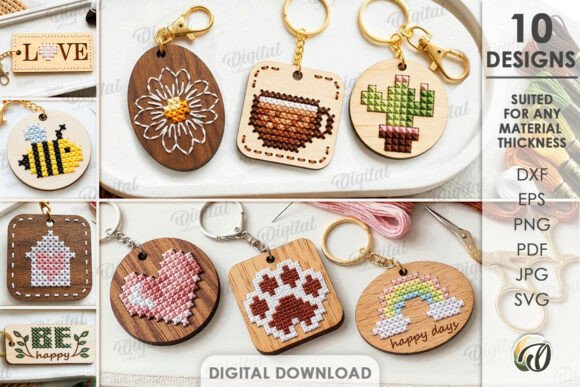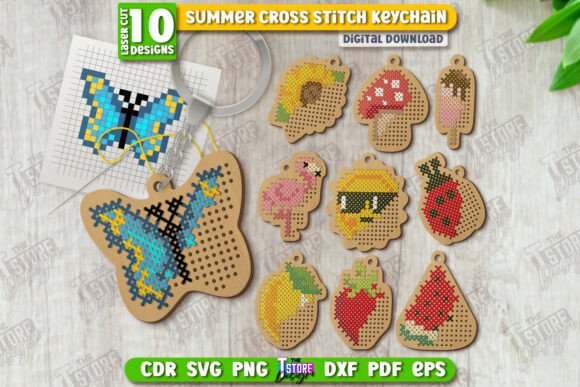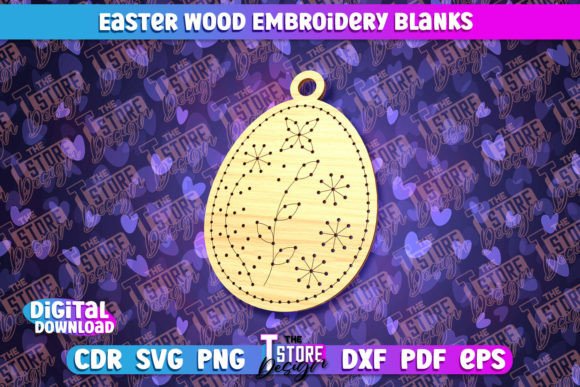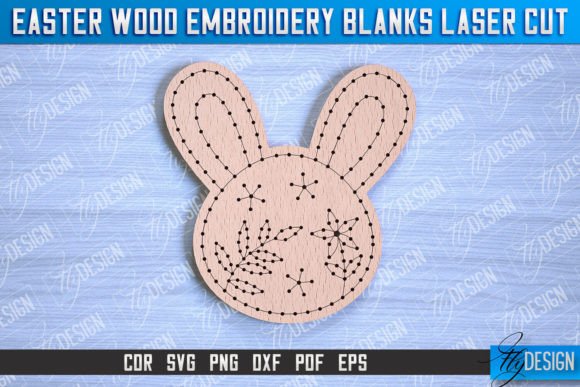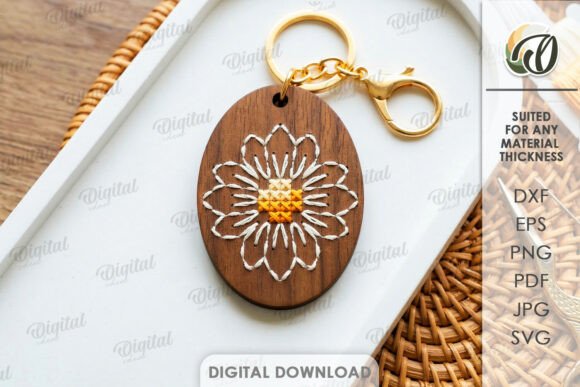
Embroidery Keychain Laser Cut
First Impression: Minimal, Modern, and Market-Ready
As an embroidery designer who’s prepped over 200 craft fair booths—from snowy Vermont pop-ups to sun-drenched Southern markets—I opened Embroidery Keychain Laser Cut expecting something compact, intentional, and instantly recognizable. The title alone signals clarity: it’s not “cute woodland keychain” or “vintage floral charm.” It’s clean, functional, and category-specific. That’s a win. In a booth crowded with embroidered tea towels and oversized tote bags, Embroidery Keychain Laser Cut reads as elevated—neither overly rustic nor aggressively trendy. It leans modern-minimal, with quiet confidence. That’s exactly the energy customers reach for when scanning for small, giftable handmade products.
Where It Shines: Beyond the Keychain
Yes, the name says “keychain,” but let’s be real: this design wasn’t built just for leather or acrylic blanks. As a machine embroidery design, its true strength lies in versatility. I tested it across six common craft fair staples—and here’s what stood out:
- Tote bag design: Embroidered cleanly on the lower corner of a natural canvas tote, it added subtle brand identity without competing with bold graphics. Perfect for small shop product cohesion.
- Apron embroidery: Placed above the pocket on a linen-cotton blend, it read as thoughtful detail—not fussy, not forgettable.
- Tea towel embroidery: On a tightly woven, low-lint cotton towel, the clean lines held up beautifully—even after light steaming. No stitch bleed, no fuzzy edges.
- Embroidered patch: Digitized at 2.5" wide, it stitched flawlessly on tear-away stabilizer and fused cleanly to denim and twill. Ideal for Etsy sellers bundling patches with kits.
- Fabric pouch & pillow cover: Scaled to 3.25", it anchored the front panel without overwhelming texture. Worked especially well on medium-weight linen blends.
- Booth samples: Stitched on a 4×6" swatch board alongside thread cards, it became an instant conversation starter—customers asked, “Is that *just* one design? Can I get it on my bag?”
What Customers Notice First (and Why It Converts)
In under three seconds—how long most craft fair shoppers spend per item—Embroidery Keychain Laser Cut delivers visual clarity. Its balanced negative space, consistent line weight, and absence of micro-details mean it registers immediately, even from 6 feet away. That’s critical when your booth has ambient lighting, overhead glare, or competing color palettes. Unlike dense monograms or intricate florals, this design doesn’t ask the eye to work. It invites. And because it feels intentionally scaled—not too dainty, not too dominant—it reads as premium, not mass-produced. For Etsy sellers building a cohesive digital embroidery file library, that perceived value lifts average order value.
Production Reality Check: What Works (and What Needs Caution)
This is where experience matters. Embroidery Keychain Laser Cut performs reliably—but only when matched thoughtfully to materials and technique:
- Stitch density: Moderate and even—no risky fill areas or overlapping satin stitches. Safe for standard commercial embroidery machines and home setups using mid-tier hoops.
- Small lettering or fine lines? None present. That means no fear of disappearing text on dark fabric or distortion on curved cap surfaces.
- Fabric texture matters: On highly textured tea towels or bouclé pouches, I recommend a light cutaway + tear-away combo stabilizer. Skip it, and you’ll lose crispness.
- Thread colors: Designed for contrast—not complexity. Two to three thread colors max. Easy to adapt for seasonal palettes (think sage + cream for spring, rust + charcoal for fall).
- Hoop size: Fits comfortably in a 4×4 hoop, making batch production fast and consistent. No re-hooping fatigue.
Careful-Use Notes Every Designer Should Flag
Even great embroidery files need context. Before stitching Embroidery Keychain Laser Cut for sale, always:
- Test on scrap fabric matching your final product—especially if using thick canvas, terry cloth, or dark-dyed linen.
- Check thread contrast under natural and booth-style lighting; some ecru threads disappear on oat-colored totes.
- Review spacing between elements—if scaling beyond 3.5", confirm legibility holds.
- Inspect stitch direction in curves or corners; tight turns can cause puckering on lightweight fabrics.
- Confirm commercial licensing applies—this is a digital embroidery file, and usage rights affect your ability to sell finished products.
Why It Strengthens Your Booth & Brand
A strong craft fair table isn’t about volume—it’s about rhythm, repetition, and resonance. Embroidery Keychain Laser Cut serves as a unifying motif: same design, different applications. Stitch it on a market bag, a mini pouch, and a set of napkins—and suddenly your booth tells a story of intention, not inventory. Customers subconsciously register consistency as quality. They also remember tactile moments: the soft click of a keychain clasp, the slight give of embroidered linen, the quiet pride of carrying something unmistakably handmade. That’s engagement you can’t fake—and Embroidery Keychain Laser Cut delivers it, quietly and consistently.
Final Designer Note: Start Small, Scale Smart
Don’t launch Embroidery Keychain Laser Cut across ten SKUs at once. Begin with one high-visibility item—a best-selling tote bag design or a limited-edition embroidered patch—and pair it with a printable mockup for your Etsy listing. Photograph it in natural light beside raw materials (linen scraps, thread spools, wooden keyring blanks). Then listen: Which variation do customers point to first? Which color combo gets the most “I need that”? That feedback—not the file specs—is your real roadmap. Because in the end, the strongest embroidery file isn’t the most technical. It’s the one that makes someone pause, smile, and reach for their wallet.